Give everyday items a clear place
From pantry jars to closet bins, a few consistent labels can turn “Where does this go?” into a quick glance. Start small, choose familiar words, and use one label size throughout this guide.
When a cabinet is crowded or a storage bin is tucked onto a high shelf, it is easy to forget what is inside. Thoughtful home organization labels make everyday storage easier to scan and help everyone in the household return items to the right place. The best system is simple: use familiar words, label only where it helps, and keep categories consistent from one space to another.
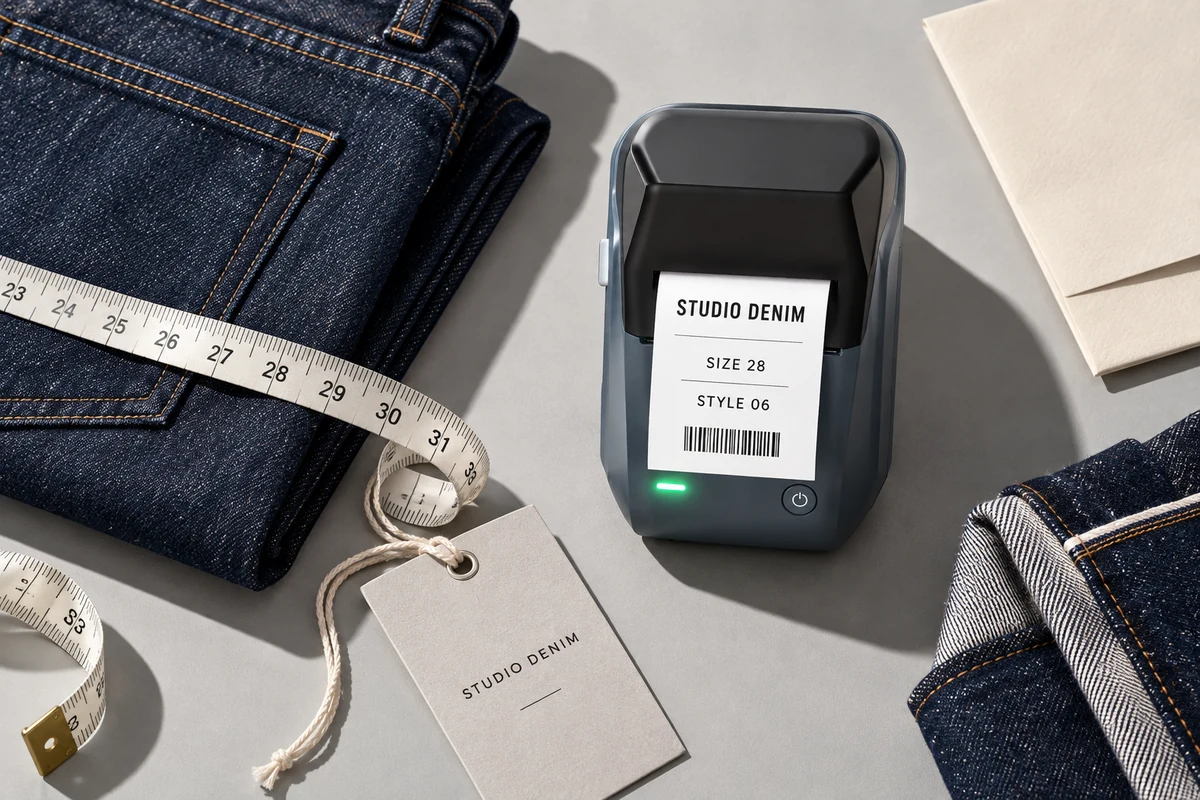
The NIIMBOT B1 is an inkless thermal label maker with Bluetooth connectivity and a maximum print width of 50 mm, according to its current product page. Its listed label options include several sizes and compatible white, clear, and round labels. That makes it a handy option to consider for small home labeling projects, from pantry containers to craft drawers. Here are practical ways to plan labels that make your home feel easier to navigate.
Start with one problem area
It can be tempting to label every drawer and container at once. A more manageable approach is to begin where people repeatedly search for things or where items tend to get put away in the wrong place. That might be a snack shelf, a closet full of seasonal accessories, or a shared drawer of chargers and batteries.
Take a quick look at the area and group items by how your household uses them. The categories should feel obvious to the people who will use the space. For example, a pantry shelf could be divided into “Breakfast,” “Baking,” and “Snacks.” A family entryway might need “Keys,” “Hats,” and “Dog Walks.” Keep categories broad enough to remain useful as the contents change.
Make pantry labels practical
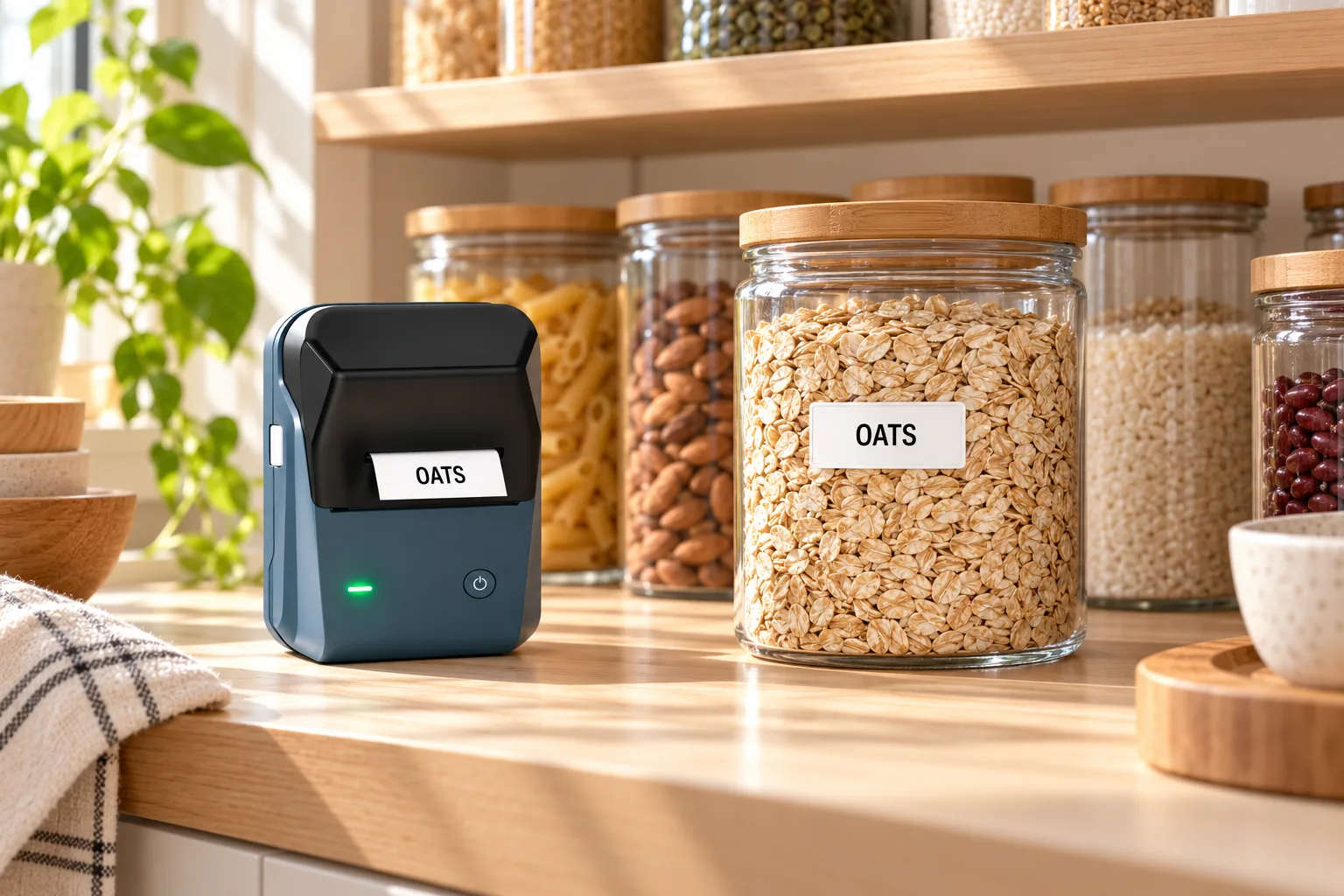
Pantry labels can help distinguish shelves, baskets, and containers, especially when packages look alike or supplies are stored out of sight. Use short, recognizable wording such as “Pasta,” “Cereal,” “Baking,” or “Lunch Snacks.” If several people share the kitchen, labels can make it easier to put groceries away consistently.
You can label the shelf or bin, the container, or both. A bin label identifies a group of items, while a container label can identify a specific ingredient after it has been transferred. Choose the approach that matches your routine; duplicating every category can add unnecessary visual clutter.
Consider the surface before applying a label. Pantry containers may be smooth plastic, glass, cardboard, or textured packaging. Check that the selected label stock suits the surface and the conditions in that location. If a container is washed often, test a label first and follow the label material guidance. Keep printed labels on the outside of containers and away from direct contact with food.
Organize closets and storage bins
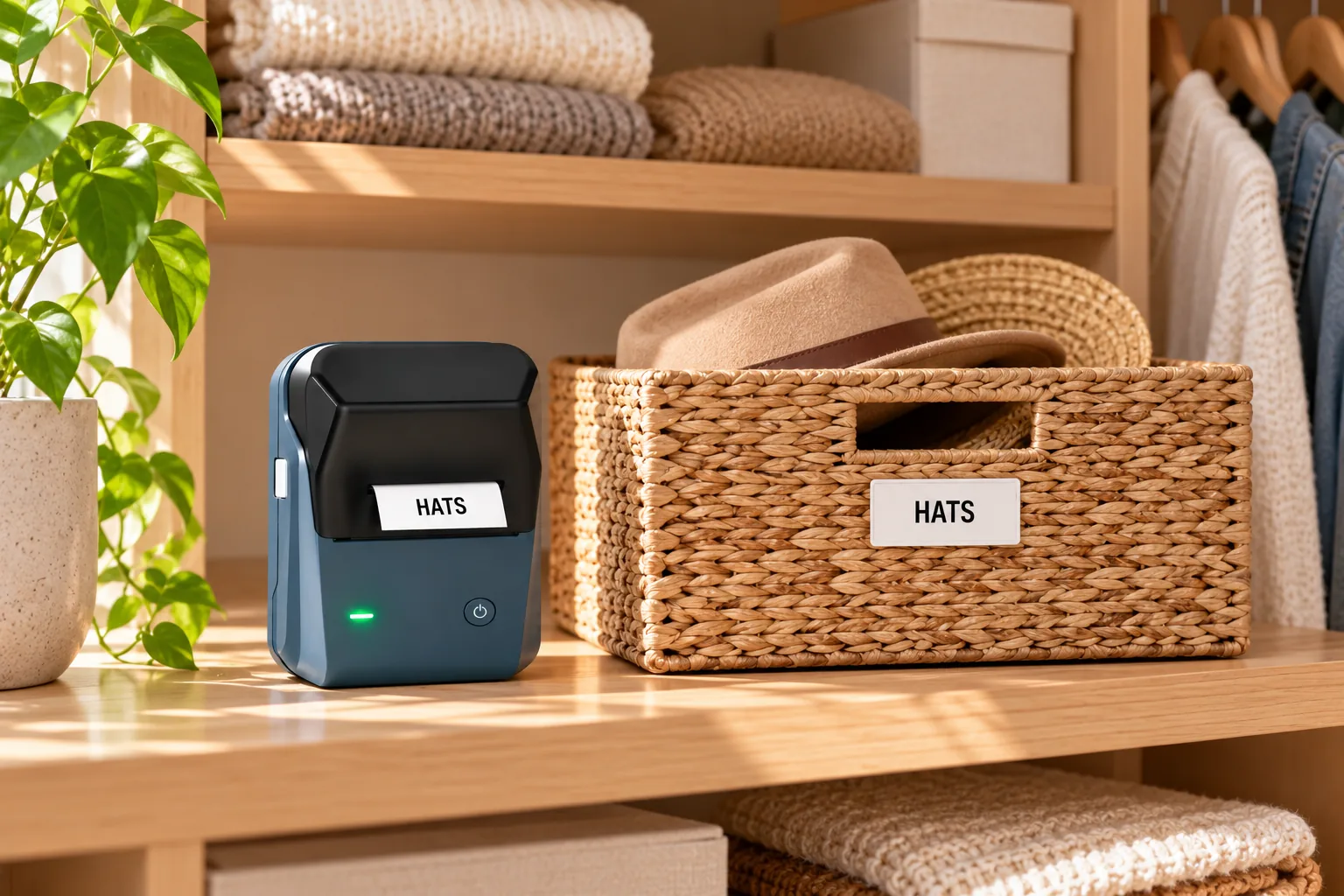
Closets often contain items that are used only during part of the year: scarves, swim gear, holiday decorations, spare linens, or travel accessories. A clear bin label makes it easier to find those things without opening every container. Use the category that best describes the contents, such as “Winter Accessories,” “Guest Bedding,” or “Camping Gear.”
For bins on high shelves, place the label where it can be read from below or from the front of the shelf. If the same category appears in multiple rooms, add a room or person name only when that distinction is useful. “Guest Towels” is clearer than “Towels” if the household has several towel storage areas.
Small drawer labels can also help with everyday items. Try categories such as “Socks,” “Belts,” “Hair Accessories,” or “Sewing Supplies.” In a child’s room, use simple words or familiar picture cues where helpful, and position labels at a height the child can see.
| Area | Label examples | Helpful placement |
|---|---|---|
| Pantry | Snacks, Baking, Pasta | Front of bin or container |
| Closet | Guest Bedding, Winter Gear | Front-facing side of storage bin |
| Laundry | Stain Care, Dryer Sheets | Visible side of basket or shelf container |
| Home office | Mail, Chargers, Printer Supplies | Drawer front or file edge |
Label laundry and cleaning supplies
Laundry areas tend to collect small products and accessories: stain treatment, clothespins, dryer sheets, mesh bags, and spare buttons. A few labels can give each group a home and reduce the time spent looking through a crowded shelf. Use labels such as “Stain Care,” “Laundry Bags,” or “Clothing Repair.”
Cleaning supplies can be grouped by room or task, for example “Bathroom,” “Kitchen,” and “Dusting.” Always keep products in their original containers unless their instructions say otherwise, and do not remove important safety or usage information. A storage label can identify a location or category; it should not replace product directions or warnings.
Bring order to desks and family spaces
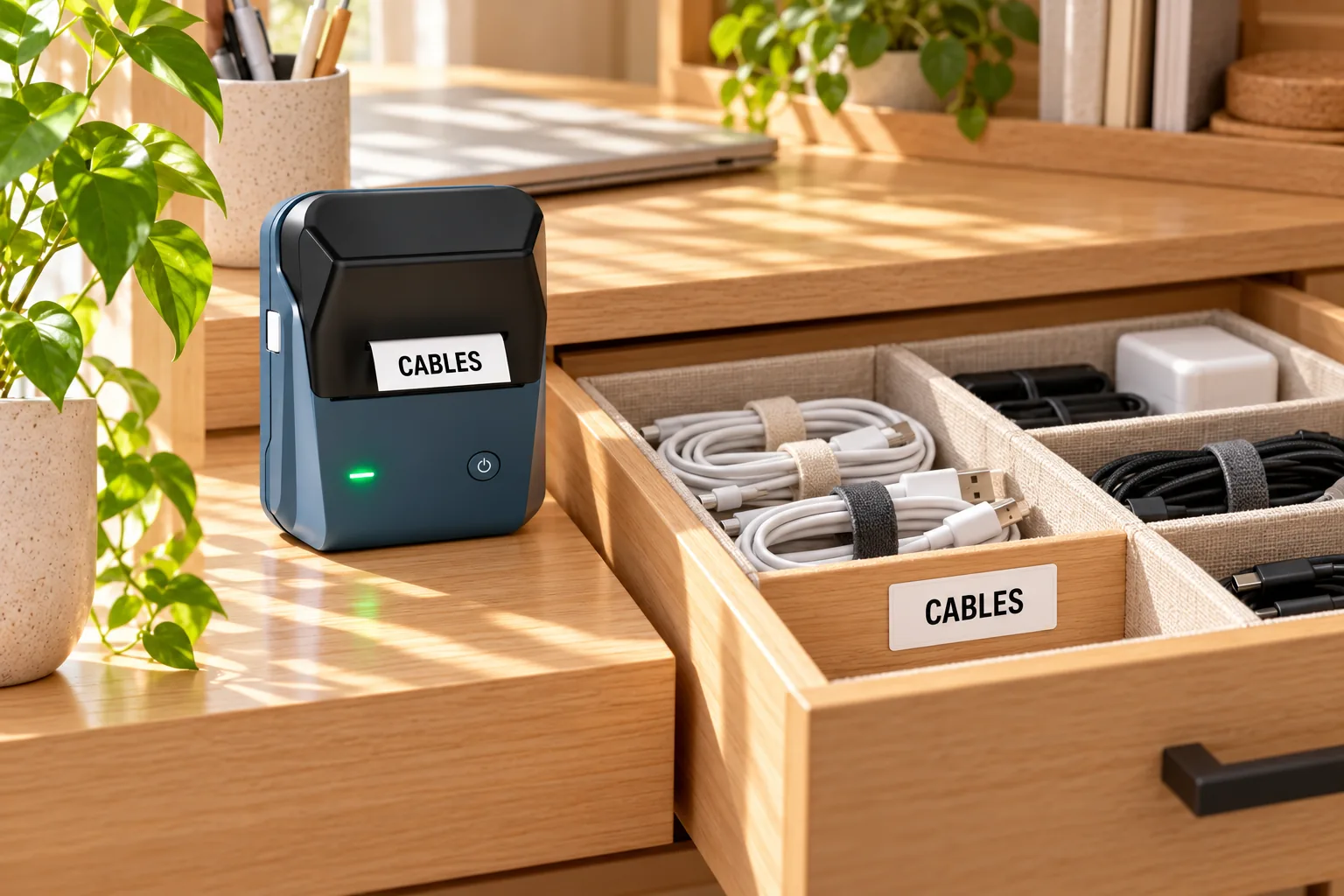
Shared home offices benefit from labels that help everyone put supplies back where they belong. Try “Mail,” “Notebooks,” “Charging,” or “Printer Paper.” For files, choose a naming pattern and apply it consistently, such as by topic, household member, or year. Keep folder labels short enough to read while the folders are stored together.
In family rooms and play spaces, labels can turn cleanup into a clearer routine. Broad categories like “Blocks,” “Art Supplies,” and “Puzzles” are usually easier to maintain than highly specific lists. If toys move between rooms, label the bin itself and choose categories that still make sense wherever the bin is used.
Cables and small electronics also benefit from identification. A small label near the plug or storage location can show which device a charger belongs to. Keep labels clear of connectors, vents, and surfaces that become hot, and check that the label is suitable for the material.
Make labels easy to read and maintain
Good home labels do not need elaborate graphics. A few design habits make them more useful:
- Use concise wording. One or two words are often enough.
- Keep type readable. Print a sample at its final size and check it from normal viewing distance.
- Use a consistent style. Repeating the same font and layout makes categories feel connected.
- Choose contrast thoughtfully. Dark text on a light label is easy to scan; clear labels need a background that keeps the text visible.
- Leave room around the text. Avoid filling every edge of a small label.
- Review labels occasionally. Update them when the storage contents or household routine changes.
The B1 product page lists multiple roll sizes, including 50 × 30 mm, 50 × 50 mm, 50 × 70 mm, and 40 × 30 mm sets. For this article’s examples, use 50 × 30 mm labels throughout. Keep the same label size across pantry jars, storage bins, and drawer compartments, and adapt the wording to each item. Confirm current B1 label compatibility before purchasing.
A simple labeling routine
Use this short sequence to avoid printing labels that do not fit the way you expected:
- Choose one shelf, drawer, or group of bins.
- Sort items into categories your household already understands.
- Measure the placement area for the 50 × 30 mm label.
- Print a sample and check wording, contrast, and fit.
- Apply it to the real surface and check visibility.
- Reuse the same format and save your template for updates.
Before selecting a roll, review the NIIMBOT B1 product details and compatible labels. The product page identifies B1 as a thermal printer that connects by Bluetooth and prints without ink. Confirm that the label width, shape, and material suit your intended surface.
Frequently asked questions
What should I label first at home?
Start with an area where people often search for items or return things to the wrong place. A pantry bin, shared supply drawer, or seasonal storage shelf is a practical first project.
What words work best on home organization labels?
Use familiar, concise category names that match how your household thinks about the items. Broad labels are easier to maintain when contents change.
Can I use NIIMBOT B1 for home labels?
The B1 product listing describes a compact Bluetooth thermal label maker and shows compatible label options. Check current product details and label compatibility for the sizes and materials you plan to use.
Should I label every container?
No. Label containers when the contents are not obvious, when several people share the space, or when items are stored out of view. Too many labels can make a space feel busy.
How do I choose a label size?
Measure the available area and consider how far away the label will be read. Print a sample at the intended size and check that the text remains comfortable to scan.
Give everyday items an easy-to-find home
A home labeling system works best when it reflects real routines. Start with one spot that causes friction, choose categories everyone understands, and make a sample before labeling the whole room. As needs change, update the wording rather than keeping labels that no longer fit. If you want a compact thermal printer for household organization projects, explore the NIIMBOT B1 and check which compatible label stock fits your surfaces.
Make home organization easier to maintain
Explore NIIMBOT B1 and find compatible label options for your home projects.
Explore NIIMBOT B1